The Evolution of Soccer Dark Arts: Why Haaland Escaped
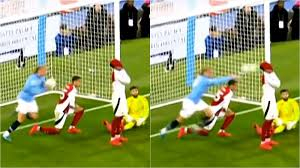
The Evolution of Soccer Dark Arts: Why Haaland Escaped Punishment for Unsportsmanlike Conduct
Why did Erling Haaland escape a red card for throwing a ball at Gabriel? Discover how modern football’s dark arts and VAR blind spots redefine gamesmanship.
Introduction The Football Dark Arts
In the dying seconds of the Manchester City versus Arsenal clash at the Etihad, the world witnessed something that felt like a throwback to the gritty 90s, yet it was distinctly modern.
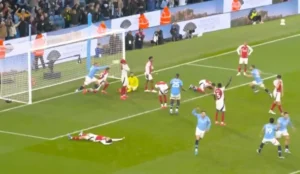
John Stones had just poked home a 98th-minute equalizer, sending the home crowd into a frenzy. Amidst the chaos, Erling Haaland plucked the ball from the net and threw it directly at the back of Gabriel Magalhães’s head.
To the casual observer, it was a moment of petulance. To Arsenal fans, it was a blatant red-card offense that went unpunished. But to those who study the Football Dark Arts, it was a masterclass in psychological warfare.
Erling Haaland didn’t just throw a ball; he tested the structural integrity of the Premier League officiating system and won.
This isn’t just a story about one match or one rivalry between Manchester City and Arsenal. It is a deep dive into the evolution of gamesmanship.
We are exploring how elite athletes exploit the blind spots of technology, why VAR remains silent during “minor” physical provocations, and how you can identify these mental traps before they ruin your own game.
The Moment of Impact: A Viral Spark in the Title Race
The high-definition footage of Haaland’s ball-throw became an instant meme, but its implications are far more serious than social media banter.
When Haaland targeted Gabriel, he wasn’t acting on a whim. He was punctuating a match defined by extreme tension and defensive masterclasses.
The Social Media Firestorm: Within minutes, clips of the incident racked up millions of views. For many, it symbolized a lack of respect for the opponent. For others, it was the “Viking” persona reaching its peak.
The reason this specific act of aggression went viral is that it represented a physical breach of the “gentleman’s agreement” that usually governs post-goal celebrations.
The Official Silence: Despite the scrutiny of dozens of cameras, the refereeing team and the VAR booth opted for no action. This decision left millions questioning the consistency of the rules.
If a player strikes another with their hand, it is a red card. If they throw an object—the ball—at an opponent’s head in a dead-ball situation, why does the rulebook suddenly feel so flexible?

Image generated for: “A cinematic, high-contrast wide shot of a modern football stadium under floodlights, capturing the intense tension between a powerful striker in a sky-blue kit and a towering defender in a red and white kit, symbolizing the psychological battle of the Premier League.”
The VAR Blindspot: Navigating the Technicalities
To understand why Haaland walked away without a booking, we have to look at the technicalities of the VAR protocol. Officiating is no longer just about what the referee sees; it’s about what the technology is allowed to see.
Dead Ball Incidents: The incident occurred immediately after a goal, meaning the ball was “dead.” While VAR can intervene for “violent conduct” at any time, the threshold for what constitutes violence is surprisingly high.
Because the ball is considered part of the game equipment and the force was deemed “negligible” by the officiating standards, it fell into a grey area.
Non-Violent Misconduct: VAR is generally prohibited from intervening in cases of “unsportsmanlike conduct” or “yellow card offenses.” It only looks for “clear and obvious” red card errors.
By throwing the ball instead of a punch, Haaland essentially bypassed the VAR’s jurisdiction. He committed a foul that was “too small” for the technology to flag, but “too big” for the defender to ignore.
The Referee’s Psychological Pressure: Refereeing a title decider between Manchester City and Arsenal is an exercise in crisis management. Officials are often briefed to avoid “over-officiating” and to let the game flow.
In this high-stakes environment, a referee is less likely to issue a game-changing card for an act of gamesmanship that didn’t result in an injury. Haaland exploited this hesitation perfectly.
🔗 Suggested Internal Link: “The Psychology of Elite Officiating”
Psychological Warfare and the Alpha Striker
Erling Haaland’s “Viking” persona is more than just a marketing gimmick; it is a tactical tool. In the world of Football Dark Arts, the goal is to make the defender think about anything other than the ball.
Intimidation Tactics: Haaland uses his physical stature to dominate the space around him. By throwing the ball at Gabriel, he sent a clear message: “I can touch you, I can provoke you, and there is nothing the officials will do to stop me.”
This creates a mental “itch” that a defender like Gabriel has to scratch for the rest of the game—and perhaps the rest of the season.
The Evolution of Provocation: Contrast this with historical masters of the dark arts.
* Diego Costa: Known for overt aggression, pinching, and verbal abuse to bait defenders into red cards.
* Sergio Ramos: A master of the “tactical foul” that stops a counter-attack while looking accidental.
* Erling Haaland: Represents the new breed. His provocations are calculated to happen in the “blind spots” of modern technology, using the momentum of the game to mask his intent.
Rattling Composure: The tactical benefit of this behavior is simple. If a striker can make a defender angry, that defender is more likely to make a mistake.
An angry defender lunges into tackles, loses their positioning, and forgets the tactical plan. In the final minutes of a match, a loss of composure is more lethal than a loss of stamina.
The PGMOL Precedent: The “Haaland Rule” Soccer Dark Arts
The Professional Game Match Officials Limited (PGMOL) later confirmed that the incident was reviewed by VAR and deemed not to be a red-card offense. This ruling sets a massive precedent for the future of the Premier League.
The Haaland Rule: We are entering an era where elite physical presence is often mistaken for incidental contact. Because Haaland is a “force of nature,” his aggressive actions are often viewed through a lens of “competitive intensity” rather than “misconduct.”
This creates a double standard where smaller players might be penalized for the same level of aggression.
The Defender’s Dilemma: This ruling leaves defenders like Gabriel in a vulnerable position. If they react to the provocation, they risk a red card. If they don’t react, they allow the striker to gain a mental edge.
The current interpretation of the rules suggests that as long as you use the ball as your “weapon,” you can get away with physical provocation.
Ripple Effects: Other teams are watching. Coaches will now look at this incident as a blueprint for how to rattle opponents during set-pieces and goal celebrations without attracting the ire of the VAR booth.
Mastering the Mental Edge: Lessons for the Field
You don’t have to be a world-class striker to use these principles. Understanding the “Dark Arts” is about Field Awareness and emotional intelligence.
Controlled Aggression: The key is to be the “actor,” not the “reactor.” Haaland was in total control when he threw that ball. He knew exactly what he was doing. To master the mental edge, you must learn to exert pressure on your opponent without losing your own cool.
Identifying the Bait: If you are a defender, you must recognize when an opponent is trying to bait a reaction.
1. Physical Nags: Small pushes or steps on toes during corners.
2. Verbal Jabs: Insults directed at personal performance or teammates.
3. Visual Provocation: Acts like the ball-throw or “shushing” the crowd.
The Awareness Checklist: To stay protected on the pitch, follow these steps.
* Maintain Distance: Don’t let the striker get into your personal space before the ball is in play.
* Communicate with the Ref: Early in the game, point out small provocations to the official. This puts the striker on their radar.
* Focus on the Reset: After a goal or a foul, immediately look at your captain or coach to reset your tactical focus.
The Future of Gamesmanship
The game of football is evolving. We are moving away from the era of “enforcers” who simply kick people, and moving toward an era of “psychological technicians.” Erling Haaland is the pioneer of this shift. He understands that in a world of 4K cameras and VAR, the best way to cheat is to do it in plain sight, using the rules as your shield.
As Arsenal and Manchester City continue their rivalry, the “ball-throw incident” will be remembered as the moment the Dark Arts went digital. It wasn’t a lapse in judgment; it was a calculated move in a high-stakes game of chess.
FAQ: Understanding Football Dark Arts and Officiating
What exactly are “Football Dark Arts”?
Dark arts refer to the various legal and semi-legal tactics players use to gain an advantage. This includes time-wasting, tactical fouling, baiting opponents into cards, and psychological intimidation.
Why didn’t VAR give Haaland a red card for the ball-throw?
VAR can only intervene for “clear and obvious” errors related to red cards. The PGMOL officials determined that throwing the ball at Gabriel did not meet the high threshold for “violent conduct,” as it lacked the necessary force and intent to cause injury.
Is throwing a ball at an opponent technically a foul?
Yes, it can be classified as unsportsmanlike conduct, which is a yellow-card offense. However, since the referee didn’t see it in real-time, and VAR cannot intervene for yellow cards, Haaland escaped punishment.
How can defenders protect themselves from these tactics?
The best defense is emotional discipline. By refusing to react to provocations, defenders render the “dark arts” ineffective. Additionally, bringing these incidents to the referee’s attention early can lead to the player being monitored more closely.
Will the rules change because of this incident?
While the IFAB (International Football Association Board) constantly reviews the Laws of the Game, it is unlikely a specific “ball-throw rule” will be created. Instead, it may lead to stricter guidance for VAR officials regarding “unsporting behavior” during dead-ball situations.
Conclusion:
The Haaland-Gabriel incident is a masterclass in the evolution of modern football. It shows that being the best in the world requires more than just physical talent; it requires the ability to navigate the complex psychological landscape of the pitch.
Whether you view it as a stroke of genius or a sign of disrespect, one thing is clear: the Dark Arts are here to stay, and they are more sophisticated than ever. Stay sharp, stay composed, and never take your eyes off the ball—even when it’s being thrown at your head.
So, what do you think? Should Haaland have been sent off?
blog soccer

Discover The Best 10 Soccer Destinations in the USA for Fans.
Spread the loveDiscover The Best 10 Soccer Destinations in the USA for Soccer Fans. Let’s dive in Are you a soccer fan looking to combine your love for the beautiful [...]
Euro 2024 venue and Host Cities Guide
Spread the loveEuro 2024 venue and host cities guide. Warch the EURO 2024 venues, stadiums, and host cities accross Germany. Where will you be watching your team? Warch the EURO [...]
How we make big money in arbitrage betting
Spread the loveHow we make money in arbitrage betting (sh..sh..sh..) “Hey there, soccer enthusiasts! Want to know the secret to making money from your love of the soccer game? Well, [...]Brighton vs Manchester City Analysis: Who Wins It?
Spread the love Brighton vs Manchester City Analysis: Who Wins It? AI-Powered Match Analysis MetaDescription Brighton host Manchester City in a tactical Premier League battle. Can City bounce back, or will [...]
Euro 2024: England vs Serbia Predictions
Spread the loveEuro 2024: England vs Serbia Predictions In a highly anticipated Euro 2024 Group C clash, Serbia will face England this Sunday. Gareth Southgate’s team is eager to kick [...]